Master Books Language Lessons (Why We’re Using It This Year!)
Just so you know, this post contains affiliate links. That means if you use them to make a purchase, I may earn a commission. You can read my full affiliate disclosure HERE.
I tend to be a creature of habit.
When we first started homeschooling, I found a curriculum I absolutely loved, and figured I’d use it all the way through—from Kindergarten through high school! It seemed easiest to stick with something I already knew and was comfortable with, and NOT make changes.
And for a while, that really worked well for us.
But as the years have gone on, I’ve realized that each stage of homeschooling is a little different. What works in one season doesn’t always work the same way in the next, especially as kids get older and expectations start to shift. I’ve grown more flexible over time, and even embrace change now…espescially as I’ve realized just how many great curriculum options are out there!
This year, as I started planning ahead, I found myself thinking about changing up our language arts curriculum. Not because anything was necessarily going badly, but just because I wanted to make sure it still made sense for where we are right now.
I started thinking about things like how our daily routine, how long lessons take, how much I’m juggling across multiple kids, and how independent I want my girls to be becoming at this stage.
And I also thought about things like, how many different pieces I’m managing each day, how easy it is for me to quickly check their work and stay involved, and even how much of our learning is happening on screens right now.
We’ve used BJU Press for the past couple of years, and it’s been a really positive experience. My girls have enjoyed it, and I’ve appreciated how thorough and structured it is.
But as I looked ahead to next year, I started wondering if there might be something that would simplify things a bit—fewer pieces to keep track of, less screen time, and something that would be a little easier for me to oversee day to day. And still a good fit regarding age-level-appropriate rigor and requirements.
So for next year, we’re making a change.
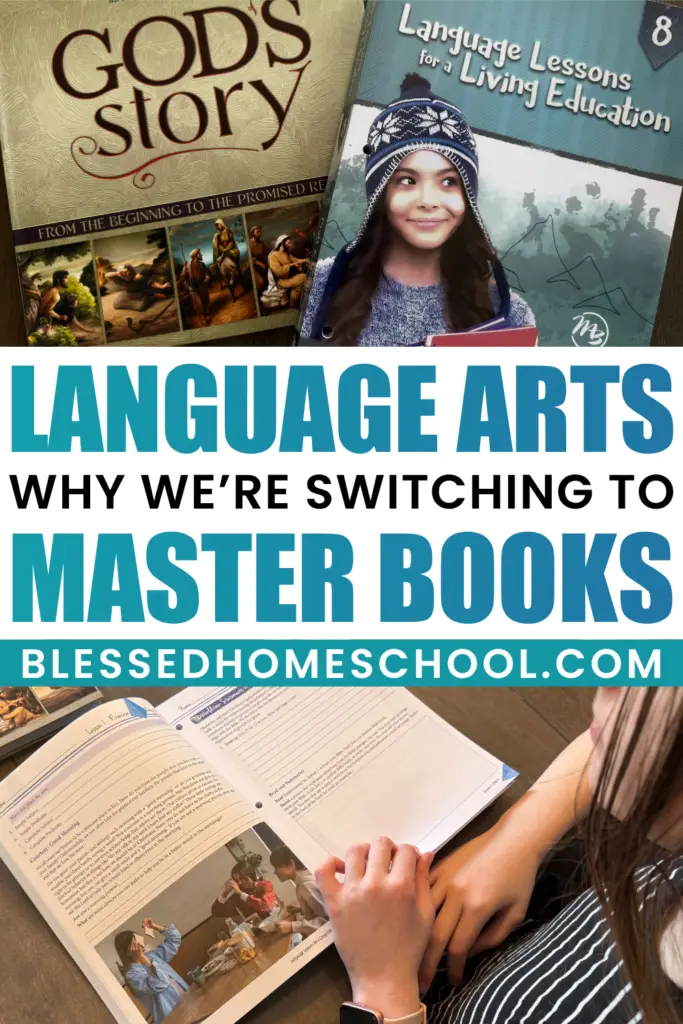
We’re going to try Master Books Language Lessons for a Living Education—and I thought I’d share what led me there!
What Led Me to Make a Change
Like I mentioned, for the past couple of years, we’ve used BJU Press for English and language arts. We’ve had a great experience! It’s a solid, well-structured curriculum that does a great job covering grammar, writing, and literature. I’ve appreciated how clearly everything is laid out, and I know a lot of families who love it for those same reasons.
But as I started thinking ahead to next year, I found myself getting curious about what other options might be out there, because, one of the biggest things on my mind was how everything functions day to day.
With BJU Press, there are multiple components to manage—books, worksheets, video lessons, and their online portal. It works well, but since I’m not sitting and watching every video lesson with them, it can be harder for me to stay as involved as I’d like or know exactly what’s being taught day to day.
I also started paying closer attention to how much of our learning is happening on screens. My kids use the computer for quite a few subjects (and, let’s be honest—video games), and I wanted to be a little more intentional about balancing that where I could.
So I began looking for something that would keep the strengths we’ve appreciated, but simplify the structure a bit—something more contained, easier to oversee, and less dependent on screens.
And what I landed on is something that’s actually completely new to me!
✏️ What Drew Me to Language Lessons for a Living Education
As I started looking into different options, Master Books Language Lessons for a Living Education (LLFLE) kept standing out to me.
One of the first things I noticed is that it’s a fully integrated language arts program. Instead of having separate books for grammar, writing, vocabulary, and communication, everything is combined into one resource.
At this stage in our homeschool, that simplicity is really appealing! It feels much more manageable and sustainable for our day-to-day routine.
A Clear Focus on Writing and Communication ✍️
As I was looking ahead to 8th grade, writing was one of the main areas I wanted to prioritize more intentionally. I wasn’t just looking for a curriculum that included writing here and there; I wanted something that would really help my girls grow as writers (and communicators!) over time.
What stood out to me right away is that this curriculum is not primarily anchored to reading level in the way many language arts programs are. Instead, Master Books places a lot of emphasis on a student’s writing ability and stamina, which makes a lot of sense if you think about it! A child can be a strong reader and still need more support when it comes to organizing thoughts, writing clearly, or producing longer written work.
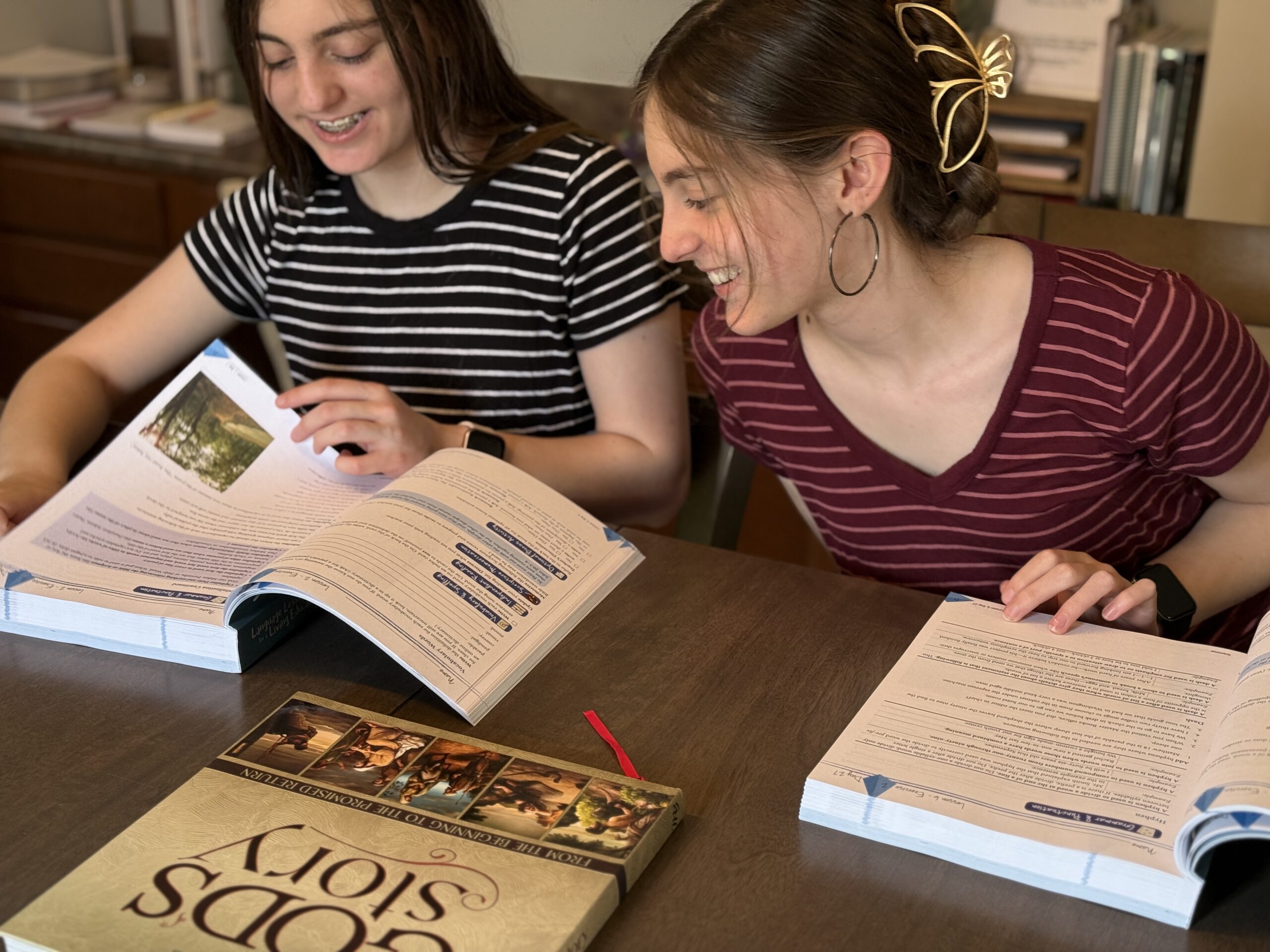
In Language Lessons for a Living Education Level 8, there’s a very clear progression in how students are taught to write. And (this is unique!), I also like that the writing instruction is connected to communication more broadly.
What I mean by that is, this is not just a grammar-and-essay program. Yes, students are working on written communication, but they are also thinking about manners, courtesy, and how to communicate well. Not just getting the mechanics of writing right, but learning how to express ideas clearly, thoughtfully, and with wisdom.
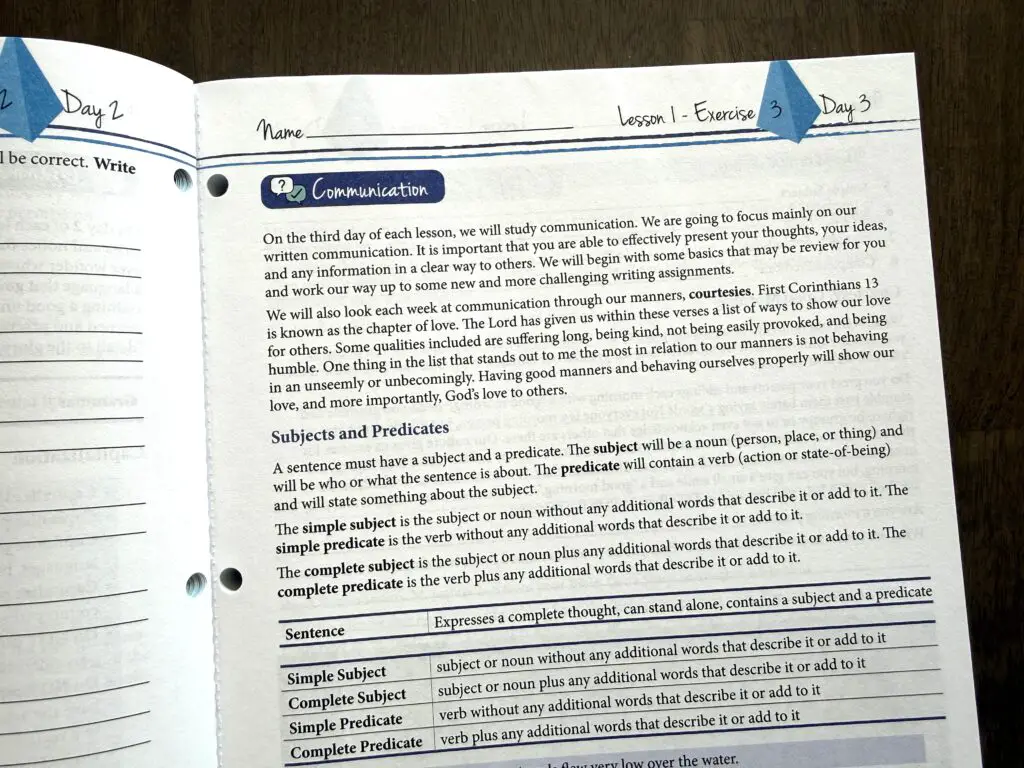
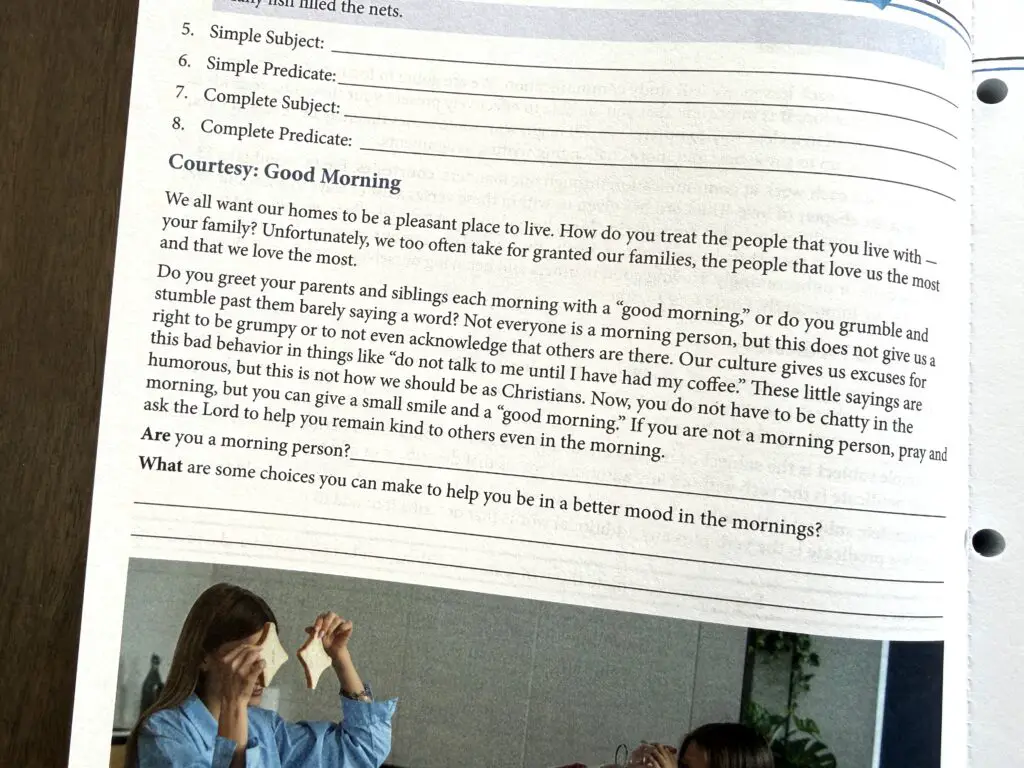
Overall, this felt like a really intentional approach to writing that gives students a clear path for growth, while still keeping the work manageable and structured. And for where my girls are right now, that was one of the biggest reasons this curriculum stood out to me.
A Consistent, Predictable Weekly Structure 📅
Another thing I really like about Language Lessons for a Living Education is the structure of the lessons.
Each week follows a consistent rhythm, with each day focusing on a specific area of language arts. That predictability makes it much easier for students to know what to expect and stay on track, especially as they begin working more independently.
At the same time, it doesn’t feel repetitive or boring, because there’s a good amount of variety built into the assignments!
Here’s a quick look at how a typical week is structured:
- Day 1: A study based on a quote, picture, hymn, Scripture passage, or poem, along with vocabulary, independent reading, and Scripture memory
- Day 2: Grammar and punctuation, with an emphasis on applying rules in context
- Day 3: Communication and writing assignments, where students develop their writing skills step by step
- Day 4: Worldview, including Scripture work and building a personal statement of faith
- Day 5: Review, reinforcing what was learned throughout the week
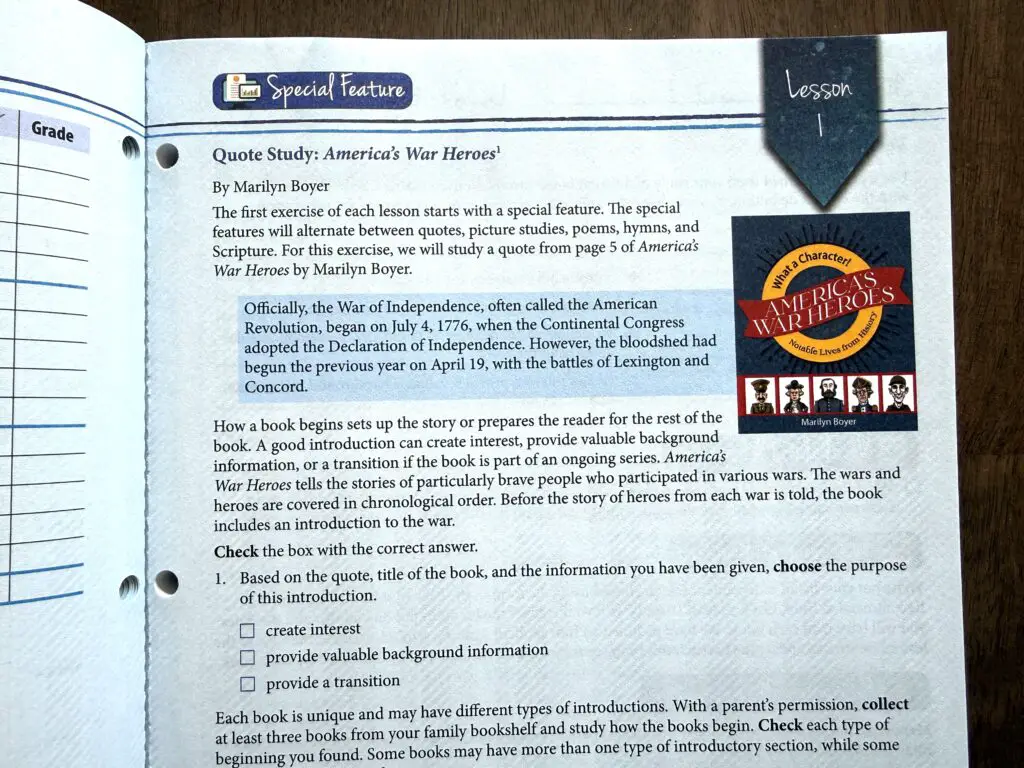
I’m really looking forward to the routine this will help us create! Once my girls understand the flow of the week, I think it will help them move through their work with more confidence and independence, because they’ll know what each day will look like.
And even within that structure, there’s still a lot of variety. Students are working with different types of texts, responding to prompts in different ways, and engaging in a mix of reading, writing, and analysis. So while the structure stays the same, the assignments themselves keep things interesting.
Overall, it feels like a really thoughtful balance—clear and predictable, but not monotonous—and I think that’s going to be a great fit for our homeschool!
Strong Biblical Worldview Integration ✝️
This was another major factor for me.
With some language arts programs, a Biblical worldview might show up occasionally—maybe in a reading passage or a discussion question—but it can feel more like an addition than something that’s truly integrated.
That’s not the case here!
In Language Lessons for a Living Education, Biblical truth is woven throughout the course in a way that feels intentional and consistent. They are regularly interacting with Scripture, not just reading it, but thinking about it, responding to it, and learning how to communicate what they believe.
One of the things I especially appreciate is the worldview component built into each week.
Students are working through passages of Scripture and, over time, are guided through the process of writing their own statement of faith. This really stood out to me, because it’s not just asking students to understand Biblical concepts—it’s asking them to articulate them, which is SUCH an important skill.
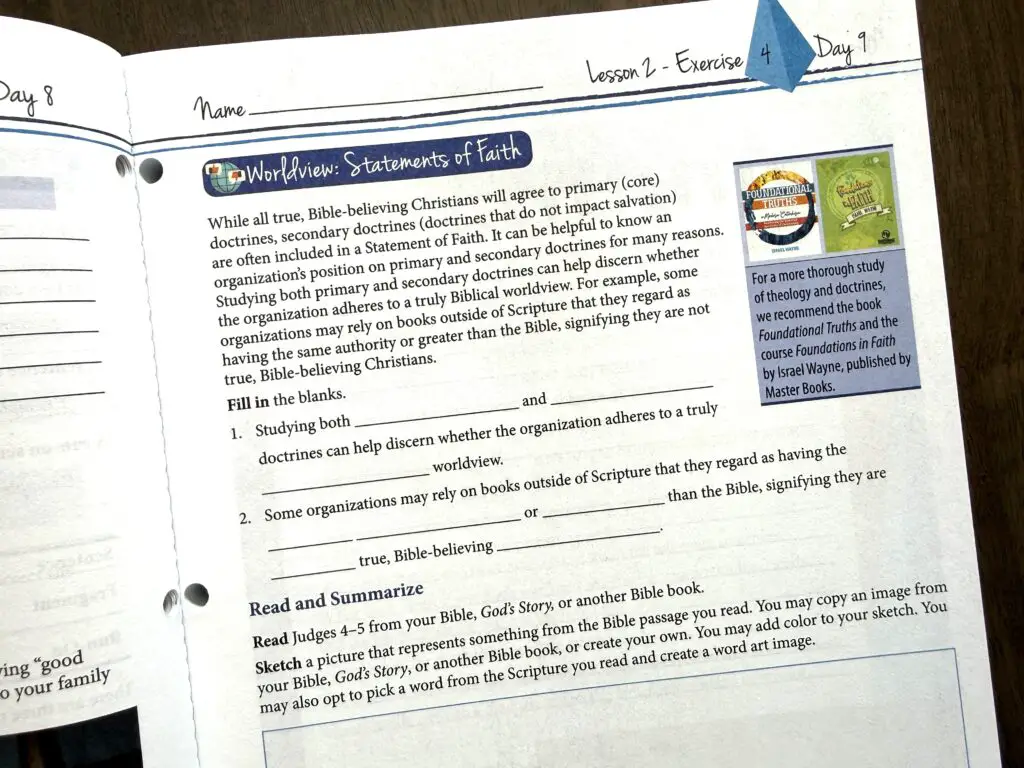
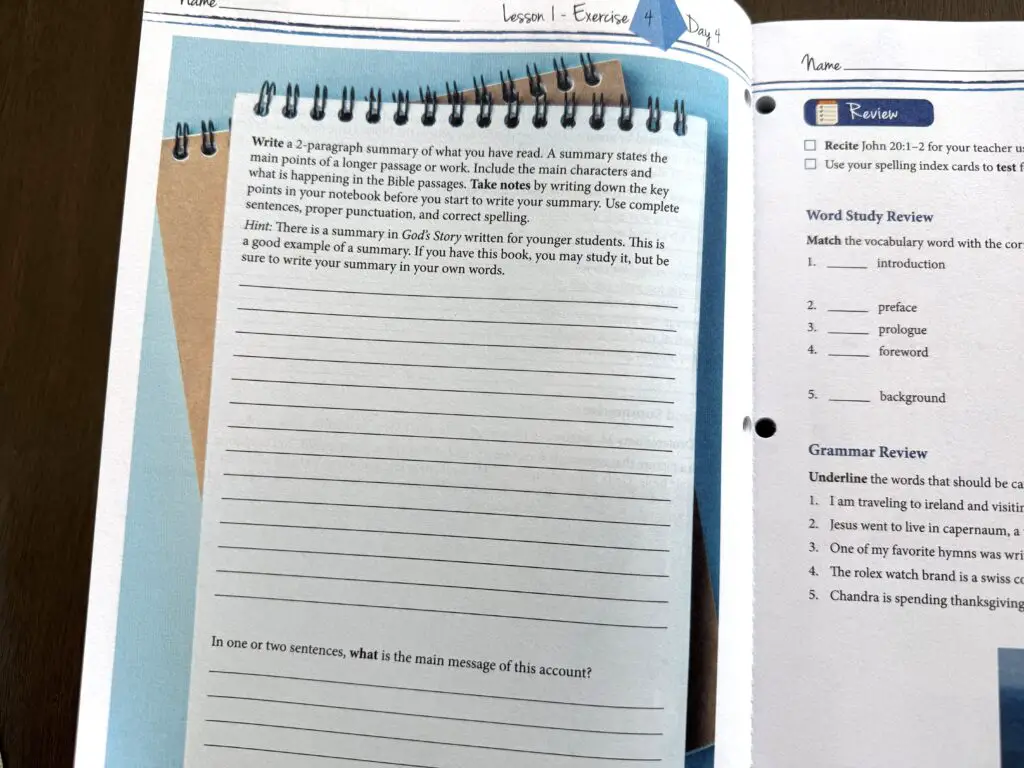
It’s one thing for students to know what they believe, but being able to clearly express those beliefs in writing and conversation is something that takes practice. I love that this curriculum creates space for that in a very natural way.
A Thoughtful Approach to Learning 📖
As I was researching this curriculum, one of the things that really helped me understand how it’s designed is what Master Books calls The GENTLE Approach™.
I’ll be honest—this was something I paid close attention to, because I know this is where a lot of questions come up. When people hear that lessons are shorter or more manageable, the immediate assumption is often that it might not be rigorous enough.
But after spending time looking through this curriculum, I don’t think that’s the right way to understand what they’re doing here.
The GENTLE Approach is built around the idea that students learn best when work is developmentally appropriate, clearly structured, and not overloaded with unnecessary stress. The lessons are intentionally concise, but they are also focused and purposeful.
Especially in language arts—and writing in particular—that really matters. Writing is one of those areas where students can very quickly become discouraged if the workload feels overwhelming or if they’re expected to produce more than they’re ready for.
What I appreciate about this approach is that it recognizes that reality 💜.
There’s still challenge here; but those challenges are introduced in a way that aligns with how students actually mature and learn.

Overall, learning more about their research-backed approach gave me a completely different perspective. The questions isn’t whether Master Books is “enough”, but whether or not it’s “effective”. I think multiple results from real families show that it is!
Final Thoughts
At the end of the day, this wasn’t a quick or easy decision for me. We’ve had a positive experience with what we’ve been using, and I don’t take switching curriculum lightly—especially in a subject like language arts, where so many different skills are being developed at the same time.
As I’ve looked through Language Lessons for a Living Education, it just feels like a really good fit for where we are right now, and I’m looking forward to seeing how it plays out over the course of the year.
If you’re considering Master Books for your homeschool, one simple thing I’d recommend is requesting a copy of their catalog. It’s a really helpful way to see how all of their courses fit together across grade levels and get a better feel for their overall approach.
And if you’re in the middle of planning and trying to sort through all the options, I hope this gives you a helpful perspective as you think through what might work best for your own family!
🎉 Enter to Win Language Arts Curriculum
Before you go, I also wanted to let you know that Master Books is currently running a giveaway for Language Lessons for a Living Education.
One winner will receive their choice of any level—from elementary all the way through high school—which is such a great opportunity if you’re considering this for next year!