
Studying Bees: A Printable Workbook
Are you studying bees in your homeschool? For most children, the world of bees begins and ends with these four statements:
a. Bees make a buzzing sound.
b. Bees make honey.
c. Bees live in hives.
d. All bees sting.
Of the three statements, one, though, is not exactly true.
It may surprise your child (and even you )to learn that not all bees have stingers. This means not all bees sting!
There’s so much to learn about the world of bees. Our kids may not realize that they are actually quite important, and we’d be in a lot of trouble without them.

I don’t know about your young kids, but when mine see a bee flying around outside, their first instinct is fear (and I will admit – for a long time, that was my reaction, too!).
When we begin studying bees, we can help our kids understand these tiny insects, and begin to not just fear them, but maybe even respect the reasons God put them here.
Fun Facts About Bees
To start, share some of these fun bee facts with your kids:
- Bees have FIVE eyes! (Two large eyes, and three smaller ones in the middle of it’s head)
- There are three types of bee “members” in a hive: the queen bee, worker bees, and drone bees.
- Bees can not see the color red. Here is an interesting article about what they can see!
- Worker bees are the ones going from flower to flower and collect nectar.
- Honey bees beat their wings about 200 times per second!
Why Studying Bees is Important
Sadly, colonies of bees have been disappearing over the last decade. This is a big problem because they are essential for pollinating so many of the foods we eat, as well as flowers and trees that wildlife enjoy as their habitats. According to Woodland Trust, while pollination can happen in other ways (the wind or other insects, for example), bees can do this on a very large scale that is very hard (and costly) to replicate manually.
Studying bees can help our kids understand how important these pollinators are, and how they can help protect them. Super Simple shares a few fun activities you can do with your kids to help bees thrive right in your own backyard.
Studying Bees Workbook
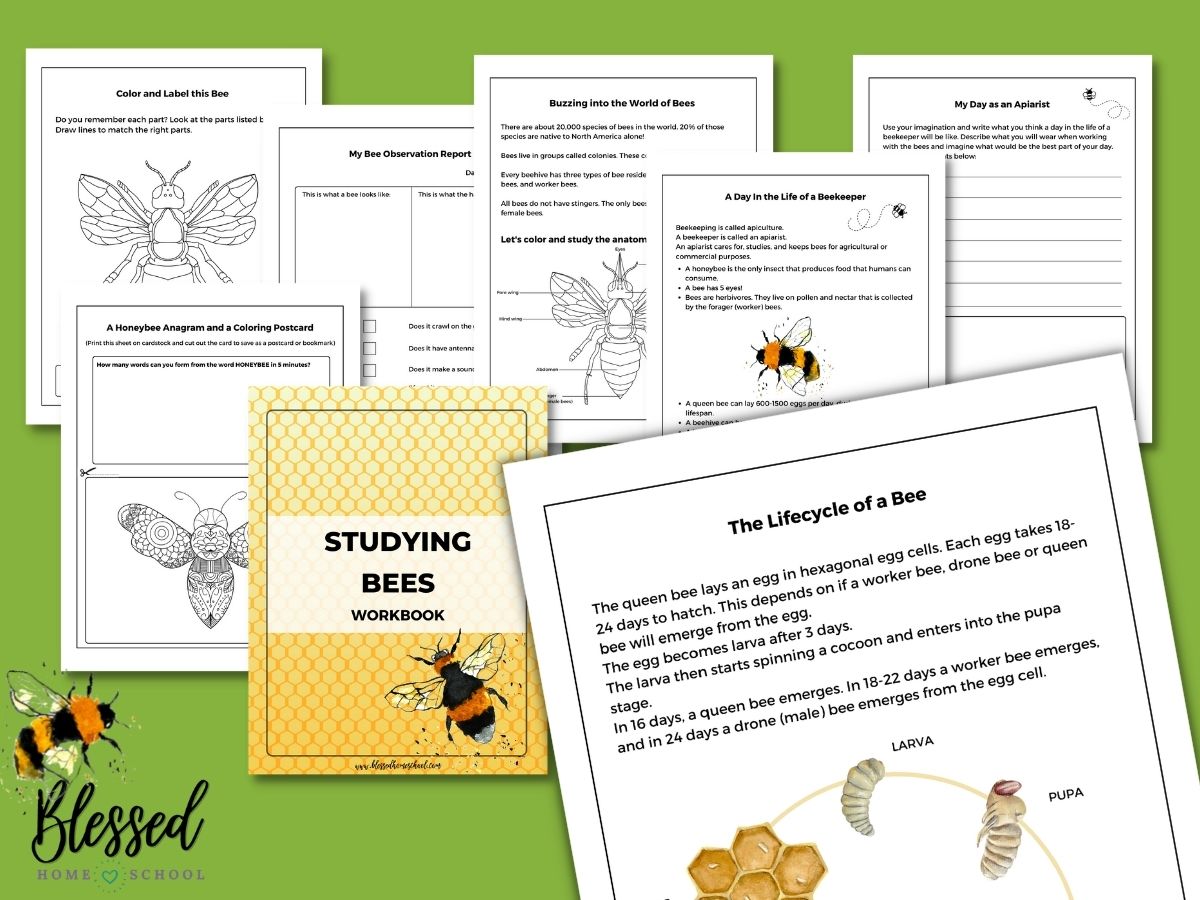
To make things engaging, interactive, and easy to learn, I’ve also put together a fun workbook to help your child learn just how important bees are to our world.
And yes, they do provide us with more than just honey.
This 8-page workbook includes facts about bees (for instance, did you know a bee has 5 eyes?!) and activities to help your child appreciate this humble insect.
Through the workbook, your child will learn and study
1. The anatomy of a bee
2. The lifecycle of a bee
3. Important facts about bees
4. What an apiarist does
and more!
This learning experience can be elevated to a family study by incorporating activities to reinforce and possibly even encourage a love for apiology (the study of honeybees).
Other fun family bee-centric activities may include:
- Creating watercolor art pieces of a bee, its hive, or even a beekeeper in action.
- Making/baking treats using honey as the main ingredient. (Honey muffins are a definite recommendation!)
- Visiting a local beekeeper.
- Watching a documentary about bees.
These activities will complement the workbook and provide a visual backing to everything your child will be learning.

The workbook is ready for download through my shop; click below to check it out!
Introducing your child to the world of bees through this mini unit study could very well open a world of possibilities.
You never know.
The seed sown today may grow into the possibility of having your own resident apiarist a few years down the line!