Homeschool Supply Checklist for New Homeschool Moms
Just so you know, this post contains affiliate links. That means if you use them to make a purchase, I may earn a commission. You can read my full affiliate disclosure HERE.
When you first decide to homeschool, it’s easy to think you need to replicate a full classroom at home—desks, bulletin boards, a globe, the works. But here’s the good news: you don’t need to stock up on everything at once. In fact, you probably already have most of what you need to get started!
And honestly, what you need really depends on the ages of your kids and a LOT of other factors; but I’ll walk you through some essential homeschool supplies, share a few helpful (but totally optional) tools, and give you simple tips for organizing it all.
Whether you’re getting ready for your first year or transitioning mid-year, I hope this homeschool supply checklist will help you start with confidence—and without overwhelm.
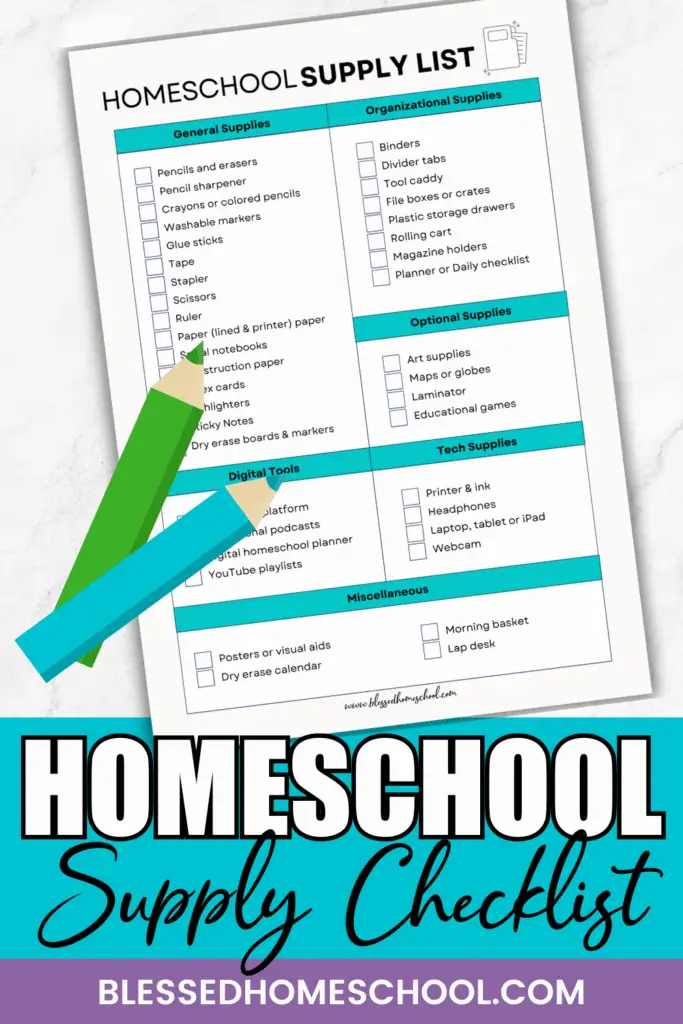
✅ What You Really Need to Start Homeschooling
Let’s start with the must-haves—the supplies that many homeschool families use on a daily basis. These basics will set you up for a smooth start:
A place to work – This doesn’t have to be fancy! The kitchen table, a couch, or a small desk in the corner all work just fine. We have homeschooled all over our home throughout the years; if you’d like to see our current homeschool space, you can check out my video here.
Basic school supplies – Stock up on pencils, crayons or colored pencils, scissors, glue sticks, and notebooks. A small pencil sharpener and ruler are helpful too.
⭐ Find all of my favorite homeschool supplies on my Amazon storefront ⭐
Printer and paper – Many homeschool curricula include downloadable resources, worksheets, or planning pages. A good printer (and plenty of paper!) will come in handy week after week.
Folders, binders, or clipboards – These help organize your child’s work by subject or week.
Books – A library card is gold when you homeschool! You’ll also want to start building a home library over time.
Curriculum or Learning Resources – Once you’re done choosing your homeschool curriculum, take a look at the teacher notes and supply lists. Sometimes there are items you’ll need that are unique to a certain curriculum, and you’ll want to have these on hand before you begin.
That’s it! Truly. You don’t need to recreate public school at home. Homeschooling is flexible, and your supply list can grow as your confidence grows.
🛠 Helpful (But Not Required) Homeschool Tools
Once you’ve got the basics down, there are some extra tools that many homeschool families enjoy using. These aren’t essential—but they can make your days more organized or fun:
Whiteboard – Great for working out math problems or writing spelling words. Get a magnetic one so you can use it to display artwork, chore charts, or helpful visuals.
Laminator and dry erase pockets – Perfect for reusable worksheets, checklists, and games.
Craft and art supplies – Keep a bin with construction paper, paint, pipe cleaners, and markers for hands-on learning.
Bookshelf or rolling cart – Helps keep materials neat and accessible, especially if you don’t have a dedicated homeschool room.
Planner or homeschool binder – Use this to track lessons, attendance, reading logs, or goals. You can check out some popular homeschool planners in this post.
Headphones – If you have multiple kids or use online curriculum, these are a lifesaver! We use these headphones for our kids.
Laptop or tablet – Not required for everyone, but helpful for online classes, YouTube videos, or typing practice. Check out this post if you need some tips on the right computer for homeschooling.
Educational board games or puzzles – Great for learning through play and reinforcing concepts.
💻 Digital Tools and Online Resources
Whether you’re a techie homeschooler or just dipping your toes in, these digital resources can be wonderful additions to your homeschool:
- YouTube – Free science videos, history documentaries, art tutorials—so much great content.
- Typing programs – Try something like Typesy to build keyboarding skills and more.
- Math and reading apps – Reading Eggs is one of my favorite options!
- Printable worksheets and lapbooks – Sites like Teachers Pay Teachers have affordable, ready-to-go resources.
- Digital homeschool planner – Homeschool Planet is the best option for this. Check out my Homeschool Planet review if you’re curious.
📦 Organizing Your Homeschool Supplies
Good organization can make your homeschool day flow more smoothly—but it doesn’t have to be complicated. Here are a few simple tips:
Remember, you don’t need to be Pinterest-perfect. Your system just needs to work for you.
🖨️ Free Printable: Homeschool Supply Checklist
Want an easy way to keep track of what you need? I’ve created a free, printable Homeschool Supply Checklist divided into helpful categories.
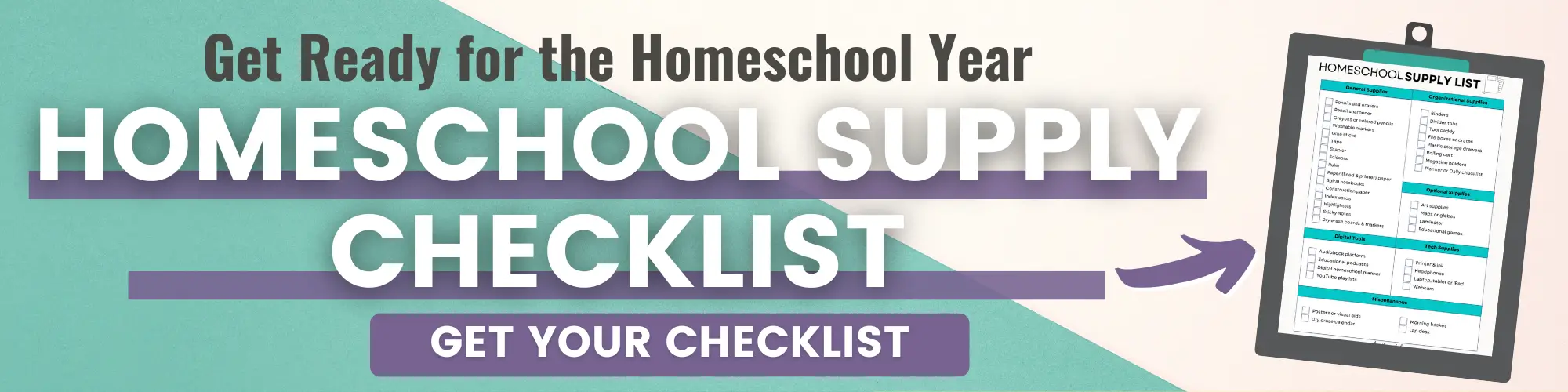
Use it as you prep for your homeschool year, shop for deals, or build your own supply bin at home.
💬 Final Thoughts: Start Simple and Grow as You Go
The best homeschool supply is your willingness to show up each day—to teach, learn, and grow alongside your kids.
Start with the basics. You don’t need a Pinterest-perfect homeschool room or a giant haul of supplies to be successful. The most important thing is creating a space where your child feels safe, supported, and inspired to learn.

You’ve got this, mama!
If this post helped you, I’d love for you to share it with another homeschool parent just starting out—or pin it for later!
And while you’re here, be sure to check out my post on How to Start Homeschooling: What You Need to Know for a step-by-step guide to begin your journey with confidence.


Blessed Homeschool is a participant in the Amazon Services LLC Associates Program, an affiliate advertising program designed to provide a means for sites to earn advertising fees by advertising and linking to Amazon.com. You can read my full affiliate disclosure HERE.