Up next in 10


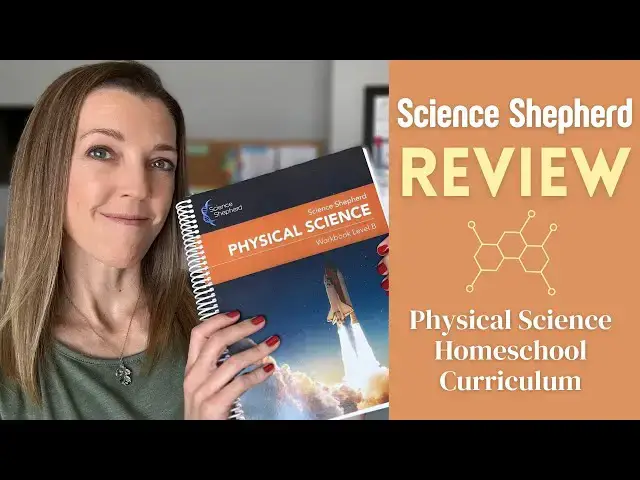
If you're looking for a complete Science Shepherd review, you're in the right place! I'm walking through their Physical Science curriculum which we are trying out right now with my son in our homeschool middle school. Get a feel for the curriculum and see if it would be a good fit for YOUR homeschool.
MENTIONED IN THE VIDEO:
🔬 Science Shepherd Curriculum – https://www.scienceshepherd.com/
*********************************************
Hey there! I’m Sara, and I’m a teacher-turned-homeschooling mom to 4 kiddos (including a set of twins!). I balance homeschooling while working full-time from home, and am so thankful you are here.
I love sharing about homeschooling on my blog, Blessed Homeschool, where you’ll find tips, resources, and curriculum reviews. Whether you are a newbie or a veteran, I hope you will leave inspired and equipped with what you find.
*********************************************
NEW TO HOMESCHOOLING?
📖 Check out my homeschooling for BEGINNERS guide: https://blessedhomeschool.com/homeschool-beginners-guide/
📍 Homeschooling in 50 States Series: https://blessedhomeschool.com/homeschooling-in-50-states-series/
Show More Show Less View Video Transcript
0:00
A direct quote from my 12 year old son. I actually like this curriculum. I'm learning a
0:06
lot more than in my other science classes. Well, okay then I guess we've got a winner
0:15
Hey you guys, welcome back to my channel or if you are new here, welcome. I'm really excited to
0:20
share today's video with you. I want to thank Science Shepherd for partnering with me and
0:25
allowing me to review their physical science curriculum in our homeschool. My sixth grade son
0:31
has been using this curriculum for a few weeks now, so I'm going to be sharing my thoughts on it
0:36
and also give you an in-depth look at it so you can make a decision on whether or not this would
0:42
be a good fit for your homeschool. So if you don't know me, my name is Sarah. I'm a homeschooling mom
0:48
to four kids. I have a sixth grade son, twins who are in fifth grade, and a pre-Ker. I've been
0:54
homeschooling since my oldest began kindergarten. I used to be a high school math teacher and
0:59
although I'd say I have more of a traditional homeschooling style, we have used different
1:04
types of curriculum over the years and I love homeschool curriculum. I love having the option
1:09
to try new things when we need to. I love reviewing curriculum, going to curriculum conventions
1:15
all of it. Science is typically something we have all done together as a family, but my girls are
1:20
actually two years younger than my son. So this year I was looking into some different science
1:25
options for Luke who will be in seventh grade. I thought I had it all figured out what I wanted to
1:32
use, but then Science Shepard contacted me to see if we'd like to take a look at their curriculum
1:37
and I said no. I wasn't really familiar with them aside from seeing their name come up in different
1:42
recommendations online. I had never checked them out and like I said, I thought I had my plan. My
1:48
mind was made up already, but of course my curiosity was piqued a little bit. So I did begin
1:54
looking at their website and materials and eventually I came around. I said, okay, we will try
2:00
it. I figured at the very least I will be able to share this with other moms who might want to learn
2:06
about it, right? So I talked to my son and asked him if he'd like to work through a unit of this
2:10
curriculum with me and if he liked it, we could continue using it for his science class in the
2:14
fall. Well, you already know how that ended up. You get a quote like he gave me at the beginning of
2:19
this video. He's absolutely loving it and honestly I am too. So let me explain what first stood out
2:26
to me about the curriculum and then I'll explain how it works and give you a look at the books
2:31
First, it's important to me that we use a curriculum that is biblical worldview based
2:36
that openly recognizes the Bible as the inspired, inerrant word of God, the source of truth. I want
2:42
a curriculum that uses the Bible as their framework for understanding science. I want my
2:47
kids to learn about God through science and how he says it should be used. Check. Second, I want a
2:52
curriculum that will present other viewpoints so we can purposefully and intentionally discuss them
2:58
I want my kids to learn about things like the difference between the creation model and the
3:03
naturalism model, what scientific facts say about each of these, and how to interpret those facts
3:08
I want to prepare them for conversations they will face in life with people who might not believe
3:12
the same things they do. I don't always know the best way to do this or have these discussions on
3:18
my own. So I want a curriculum that will come alongside me and help me with this. Check
3:23
Finally, low prep is key. Our schedule is so busy. And at this point, I'm really looking for something
3:30
that's not only low prep for me, but something my son can do independently pretty easily on days
3:35
that I need to have him do this. Also, we can usually fit in science about three to four days
3:40
per week. So something with a schedule like this is my preference. We've tried fitting science in
3:46
five days a week, but it just doesn't happen for us. And check. Science Shepherd is a curriculum
3:51
that was developed by a homeschool dad, Dr. Scott Hardin, who wanted to bring quality science lessons
3:57
to the homeschool community. He noticed many parents feeling inadequate to teach upper level
4:02
science at home and saw people often making the decision around this age to send their kids to
4:07
public school. He really had a vision to equip parents to teach these classes at home and feel
4:13
confident that their kids were still getting a great science education. As the company has grown
4:18
they have added more classes and more technologically advanced teaching techniques to their online video lessons. So while they really began with just biology and life science
4:28
now you'll find video based classes ranging from introductory science to biblical archaeology
4:33
and even fundamentals of chemistry and physics. They've got a great course progression chart on
4:38
their website, which can help you choose which course your kids should start with
4:41
and where they might go next. So like I mentioned earlier, we are currently using
4:46
their physical science course. This particular class is for kids in grades three to six or about
4:53
eight to 12 years old. Now, according to their course progression, kids in seventh and eighth
4:56
grade could still use this course. And I chose it because my son hasn't really studied chemistry or
5:02
physics yet, but we have covered a lot of the other topics I saw in the life science course
5:07
So I figured we would give this a try. This is a video based class with a focus on chemistry
5:12
physics, and astronomy. You do receive a physical workbook and answer key, and there are actually
5:18
two different levels of the workbook to choose from. You have level A or level B. The reason for
5:23
this is that this class is structured in a way that you could have kids a couple of grades apart
5:28
still do science together because the workbooks are differentiated. Level A is for your younger
5:33
students, so about ages eight to 11, and level B is for older students about ages nine to 12. So let's
5:40
say you have an eight-year-old and an 11-year-old. They could possibly do this class together. They
5:45
would simply watch the video lessons together and then do the workbook exercises on their own. And I
5:50
actually have both levels here, so I'm going to show you the similarities and differences between
5:55
them so you can kind of see how they differ, how they're the same, and so let's take a look at that
6:00
real quick. Okay, so here is workbook level A. This is going to be for your kids ages about eight to
6:06
11, and then level B is going to be for your kids that are about nine to 12. And again, they follow
6:14
the same video lessons, so you could have your kids doing the same videos together, but then the
6:22
questions are just going to be different. So for example, let's take a look at the first lesson
6:27
Physical Science Introduction Part One. So in this lesson, there are six questions, and they use
6:33
a variety of questions in their book. They kind of go over that in the beginning. They've got
6:38
different question styles, some fill-in-the-blanks where you have to circle the different parts that
6:44
go in the blanks for your answer. There are just multiple choice, and some multiple choice questions
6:52
don't have just one answer, so they just specify that to know there might be more than one answer
6:56
for those. And then there are fill-in-the-blank style questions and another type of fill-in-the-blank
7:03
where they give like a word bank that they can use. And then finally, true or false questions
7:10
as well, and that's in level B for the older kids. That is going to be pretty much the same. So you
7:20
see the same types of questions. Already one difference you might notice is that the print
7:25
is just a little bit bigger in this one, and this is a little bit smaller. So if we go back and look
7:31
at that first lesson, you can kind of see the questions there. Let's compare that to the level B
7:38
So for lesson one in part B, they have the same exact questions for one and two. For three, question
7:46
three in the younger version, they've got a true or false question. And in the older book, they have
7:53
kind of a multiple selection question. And then moving on to question four in level A book
8:02
or the younger kids book, they have a question where they're choosing the correct statements
8:06
and that actually is question number five in this one. So in the older kids book, they have
8:13
another short answer question kind of in there where the kids have to write in their own answers
8:19
And then in book A, they've got two true and false questions at the end. And then you see that
8:25
in book B as well. So you've got the same exact true and false questions there. And then you have
8:32
a couple of follow-up questions in book B. So this would be for your nine to 12 year olds. You've got
8:39
some information to read, and then you have two more questions kind of based off of that information
8:46
And then there is a word search puzzle. So you've got a word search puzzle in both books
8:53
And it looks like in this book here, there are just a couple of extra words for them to find
9:00
not too many, but just a couple extra. And then it's really easy to tell how far to go
9:05
because when they turn the next page, they're going to have that big class two at the top
9:09
So they know to stop there. And then they're going to wait until they watch the videos for class two
9:13
before they do this part. This course is a 35 week course, and there are only three video lessons
9:19
per week, which is a big plus in my book. Also, the lessons are super short. They've only been
9:25
about five to seven minutes long, which works really well for my son. I think that's why he's
9:30
been loving this so much. He really enjoys video based lessons. One, because he can work
9:35
independently. He likes to wake up early and get his schoolwork done because then he has time
9:41
during the day to do more of the things he wants to do. Not that he can't work independently with
9:45
just a book, but he learns well by watching videos and listening to a teacher teach. But two
9:51
these lessons are short. They are not long and drawn out or filled with fluff or things that
9:56
are not needed. They cut straight to the point. They don't waste time. Plus they're not boring
10:01
Yes. These are kind of your typical video where you have the teacher talking to you the entire
10:06
time, but the visuals on the screen change often and they make use of a lot of diagrams
10:12
interesting pictures and videos, things like that. It was really easy to set up my account online
10:18
and very easy to log in and see your classes and access them. So this is what my dashboard looks
10:25
like. It's under my name because I use my email address to create my account when I created it
10:31
And then if you scroll down, you'll see all of the courses you're enrolled in here. So right now
10:36
I just have physical science. It'll show the percentage that you have finished
10:40
You can look at an overview, see scope and sequence, or you can click on here to resume the
10:45
course. So once you click resume course, it will take you into the course page. And this left bar
10:54
over here is where you navigate everything. It is set up very easy to navigate. You just start at
11:00
the beginning. There's a little drop down arrow to click on and you just click on each lesson
11:06
one by one. So for example, in week one, class one, class two, class three, things like that
11:13
Once your student is done watching the video for that lesson, they just click complete and continue
11:18
and that adds the little check mark over here for them. So they know they are finished with that
11:24
particular lesson. At the very beginning, there was a little welcome section, which I appreciated
11:29
So if you click through this, it gives you just a little introduction. You have a printable
11:35
schedule. If you'd like to have something you can print off to use to keep track of your lessons
11:40
Side note, although this is very easy to keep track of in here, you can buy lesson plans on
11:46
Homeschool Planet. They are available in the marketplace. So if you enjoy using Homeschool
11:53
Planet like I do, you can purchase the lesson plans and it will add them to your online homeschool
11:58
planner for you. I love this option, even though it's pretty easy to just log in and click through
12:06
follow the lessons. You know, you can certainly do that, but I do like to have my kids check
12:11
things off in Homeschool Planet. It's just how we keep track of everything throughout our day
12:15
So that is a cool feature that I wanted to share in case you use that like I do
12:21
Okay. And then over here, you'll see an activity supply list. This is really nice. So you can have
12:28
everything prepared. This will give you everything that you're going to need for any of the experiments
12:34
or extra activities during the lessons. So a lot of it is kind of common. You probably have it
12:40
around your house already, but if there are some things that you would need to pick up
12:44
you could go ahead and do that ahead of time. So that is all right there. And I loved how in our
12:49
very first lesson, Mr. Hardin gave glory to God right away and set up a background of the two
12:56
different scientific models, the creation model and naturalism model. I loved how it's clear they
13:02
will be talking about what science says about each model throughout this course. And I thought this
13:07
was great. It was explained that how someone interprets scientific facts depends on which of
13:12
those two models you believe. How science is all about uncovering facts, but then you need to
13:18
figure out what those facts tell you. He gave a great example of a sports score. The score of a
13:24
football game would be the fact, but your interpretation of that fact depends on which
13:29
team you like best. And this happens in science all the time. So it's things like this I've seen
13:36
already that I love, the way the instructor has explained concepts in a way kids can relate to
13:42
and it makes sense to them. I want a science course that's going to take a look at different
13:47
ways facts have been interpreted because I don't think kids need to be told what their
13:51
interpretations should be, but they should be able to look at the facts and be able to make
13:56
informed decisions on which interpretation is correct or how to interpret it. I love that
14:03
this is a focus of this course. There is clear teaching of science and great discussion and
14:09
reflection on different interpretations when needed. Each class begins with a review of concepts
14:16
taught in the last class. Then it presents the new lesson and then wraps it up in a nice summary
14:21
of what was just taught. So it's a nice little science sandwich you get in each little five
14:26
minute lesson. After watching the video lesson, my son grabs his workbook and completes the
14:30
exercises that match up to that lesson number. You can either have your kids do the workbook
14:34
as they watch the videos or after. We use some afterwards just so I can see what he has learned
14:40
a little bit better. They do follow really closely with the lessons though, and I haven't found the
14:44
exercises to be too tricky or too challenging if my son is paying attention to the videos
14:50
And he does pay attention because they are short and he knows he'll be able to easily answer his
14:55
questions if he does. So he'll work through the workbook. It maybe takes about five to 10 minutes
15:00
and I'll grade it afterwards using my answer key and we'll discuss anything if needed. Okay
15:06
so I'll come back to the workbook for a second. This is the level B workbook. So the one that my
15:11
son has been working in and I will show you how the answer he kind of matches up again. It's very
15:18
easy to use. So this is class two and this is the answer key that comes with the workbook. So
15:24
literally it's just a book filled with the answers. So if I'm going to go in and grade his work, I just
15:30
come and find the class two and then it really just tells me what the answers should be. So we
15:37
would go through and I would check everything. Usually I'll ask the questions and have him kind
15:42
of repeat it back to me as we go through. And then if there is anything that we need to fix
15:46
we will talk about it. Or if I need him to be more clear in his answers, we will talk about it
15:51
So that is all right there in your answer key. And these are the two things that I got aside
15:57
from the video lessons. You get the workbook and then you get your answer key. Now with this
16:02
particular class, we talked about the different questions that they're going to ask. But remember
16:08
this is split up into kind of three different parts. You've got chemistry and then you have
16:14
physics and then you have astronomy at the very end. There are no tests or exams that are included
16:21
with this. There are some different activities. So like we've got data collection, making a ball
16:27
and stick diagram, build a box, some different things at the periodic table. So I'll show you
16:32
what those look like in here. And then when you get to the end of each section, they do have a
16:37
couple of classes of review, but there are no tests that come along with this curriculum. Once
16:44
you get to their biology course, I know for sure I saw tests in there. That's a high school level
16:49
course. But with this one, there's no, no tests. So as you go through, let me see if we get to the
16:56
end of where chemistry is. Okay. So here is chemistry review part one
17:07
And then there's a part two. So going through everything that they have learned so far in
17:13
chemistry, and then they will move on to physics. Okay. And then the activities you could see
17:20
there are activities listed in here, usually just at the end of whatever lesson you're doing. So
17:27
there is flexibility here. You could do these activities the same day as that lesson. So if
17:33
we were doing class 34 and there's an activity at the end, you could do it that same day. Or since
17:39
you're really only doing the video lessons three days a week, you have some flexibility. You could
17:44
do an activity on any of the other days of that week. And there are quite a few activities
17:52
but they're not necessarily every single week. So let's see, we've got a couple here
17:58
and then we go a few classes and then there's another activity. So again, you do have some
18:03
flexibility. You can do them that same week. I typically will probably try to get to them
18:09
you know, close to when we're doing the lessons, because I think they do line up pretty well
18:12
When you get into physics, you have maybe a few less activities, but still a couple of them
18:18
And you're going to use that list of materials needed that I showed you in the online part
18:25
That should give you everything you need to complete all of those different activities
18:29
in this curriculum. So this curriculum has been working well for us so far. And there are a lot
18:34
of things that I love about it. Obviously, my son is loving it, and I'm glad we gave it a try
18:39
Since the lessons are short, I have been enjoying sitting with my son and watching them
18:44
learning with him. But this would be a great curriculum if you, you know, you could have your
18:48
kids work independently, if they're ready for that. There have been a couple of lessons where I just couldn't sit with him because I was busy with my other kids. So he's been able to work
18:56
independently very easily. We are going to continue using it the rest of this year
19:01
finish out physical science, and I think it's going to give my son a good intro and background
19:06
to chemistry, physics, and astronomy. I really hope this video gave you a good look at what this
19:11
physical science curriculum is like and what you might be able to expect from other science shepherd
19:15
courses. I think it's a great option for your homeschool science curriculum, especially if
19:20
you're looking for something that is going to point to God as the author and creator of science
19:25
a curriculum that will present facts to your kids and help them learn how to interpret those facts
19:30
and also discuss how others might interpret them as well. I'm going to, of course, leave a link to
19:34
their website in the description below, so you can go check out all the other classes they offer
19:38
and even take their course finder quiz to help you identify which option might be the best for
19:43
your child to begin with. If you like this video, don't forget to give it a thumbs up and please
19:48
consider subscribing to my channel. I love sharing about homeschooling my kids and the curriculum
19:53
we're using, tips and encouragement, things like that, and I would love for you to stick around
19:58
Leave a comment below so I can get to know you, and especially if you have any questions I might
20:02
be able to answer about Science Shepherds physical science course. Thank you so much
20:06
for watching. I will see you next time
#Education
#Homeschooling
#Homeschooling
#Science
#Biological Sciences